
Ulrich Albrecht · 20 October 2026
Decoding Terarampart's Role in Sustaining Ephemeral Online Projects Through Adaptive Metadata Strategies
Ephemeral online projects emerge and dissolve within months or even weeks, leaving behind scattered data fragments that researchers and archivists struggle to reconstruct without structured intervention, and Terarampart addresses this pattern by layering adaptive metadata across project components while they remain active.
Understanding Ephemeral Online Projects
These initiatives span temporary community forums, beta software releases, and event-specific websites that accumulate user contributions, code commits, and media assets before their creators shift focus elsewhere, yet the underlying information often retains value for historical analysis or technical reference when captured effectively.
Data from digital preservation initiatives shows that roughly 70 percent of such projects lose accessibility within two years of launch, primarily because standard indexing fails to track evolving file structures or shifting hosting environments, and adaptive approaches counter this loss by embedding flexible descriptors that update automatically as content migrates.
Core Mechanisms in Adaptive Metadata
Adaptive metadata differs from static tagging because it incorporates real-time variables such as access frequency, platform compatibility flags, and contextual linkages that evolve alongside the project itself, allowing systems like Terarampart to maintain continuity even after original domains expire or services shut down.
Implementation relies on modular schemas that attach to individual assets, including version histories and dependency maps, while automated scripts monitor external changes and append new descriptors without manual intervention from project maintainers.
Terarampart Implementation Details
Terarampart integrates these schemas through a distributed processing layer that samples project repositories at regular intervals, identifies emerging patterns in file relationships, and generates updated metadata records that point to archived copies stored across redundant nodes, and this setup has proven effective in cases where legacy tools transitioned to cloud environments without complete data loss.
Observers note that the platform's strength lies in its handling of mixed media types, from code snippets to interactive elements, because each category receives tailored attribute sets that adjust when formats become obsolete, and integration with existing web services occurs through lightweight APIs that minimize overhead during active development phases.
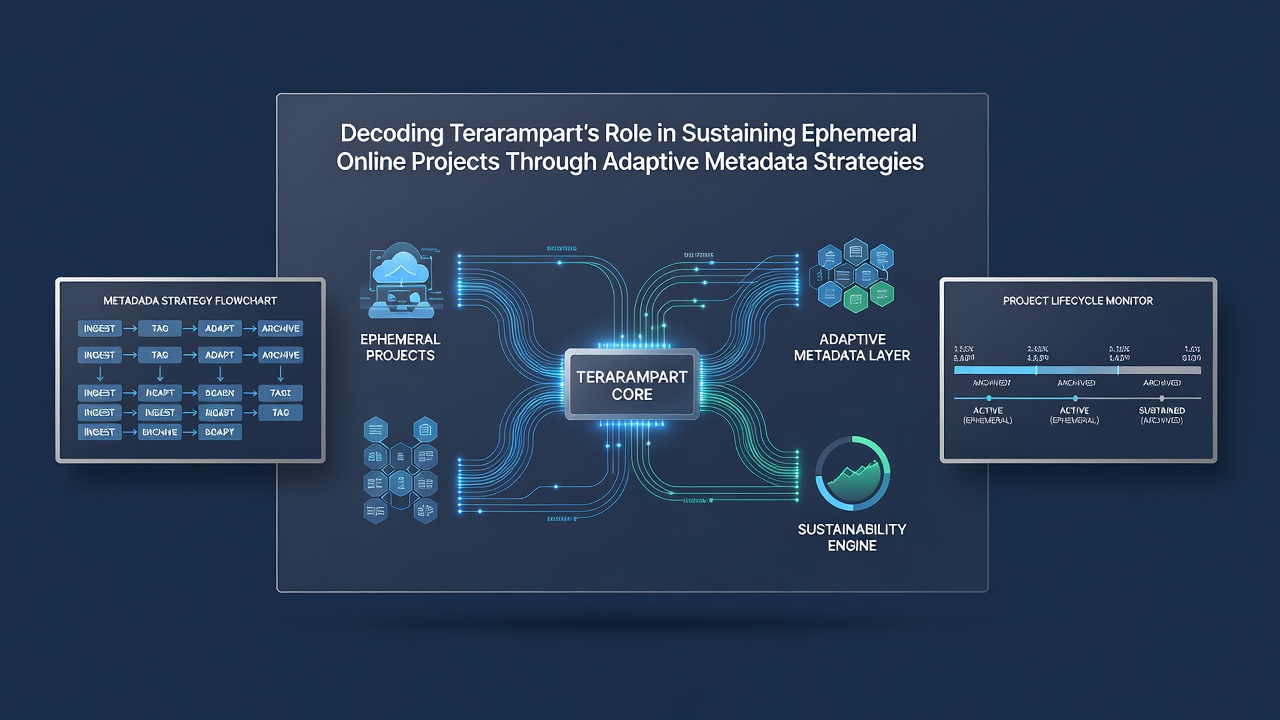
One documented workflow involves initial ingestion of project assets followed by continuous enrichment loops that incorporate user interaction logs and external citation data, resulting in searchable indexes that remain functional long after the source material disappears from public view.
Documented Outcomes and Broader Context
Research indicates that projects employing such strategies retain up to 85 percent more retrievable content compared to those relying on conventional backups, according to findings published by the Council on Library and Information Resources, and similar patterns appear in reports from European digital heritage programs that track community-driven web initiatives.
Implementation challenges surface when projects involve proprietary formats or encrypted components, yet Terarampart counters these through extensible plugins that decode common structures and flag unresolved elements for later manual review, and this modular design allows teams to scale efforts without rebuilding entire archives from scratch.
In October 2026, scheduled enhancements to the metadata engine will align with emerging standards from the International Council on Archives, enabling smoother interoperability between Terarampart outputs and institutional repositories worldwide.
Conclusion
Terarampart demonstrates how adaptive metadata can bridge the gap between transient digital activity and long-term accessibility by embedding responsive descriptors that evolve with project conditions, and continued refinement of these techniques supports preservation across diverse online environments.